
For global buyers, Stone Look Vinyl Flooring offers a practical bridge between natural appearance and everyday performance. It can resemble limestone, slate, travertine, or polished concrete without carrying the full weight, cost, or maintenance demands of quarried stone. A convincing surface begins with detail: irregular veining, restrained color variation, matte texture, and grout lines that do not look unnaturally perfect.
Flooring consultant Jamie Gold observes, “A floor should support real life, not compete with it.” That principle matters across international markets. A hotel lobby may need strong wear resistance and easy cleaning. A coastal apartment may require better moisture tolerance. A retail showroom may prioritize realistic visuals under bright lighting. The same design cannot serve every project equally well.
Look beneath the image.
Top Stone Look Vinyl Flooring should be assessed through several practical points. Consider the wear layer, total thickness, locking system, installation method, slip performance, acoustic behavior, and warranty language. Check whether product samples match full-scale batches. Small samples can hide repetition. That is a common buyer mistake.
Responsible sourcing also deserves attention. Ask manufacturers for technical sheets, indoor-air-quality information, recycled-content data, and testing standards. Certifications vary by market, so claims should be verified rather than accepted casually. Some products look impressively realistic but feel too artificial underfoot. Others perform well yet repeat their printed pattern too visibly.
This guide compares leading options for global buyers, balancing visual authenticity, technical reliability, installation practicality, and long-term value. The perfect stone effect may not exist. The right choice depends on honest priorities.
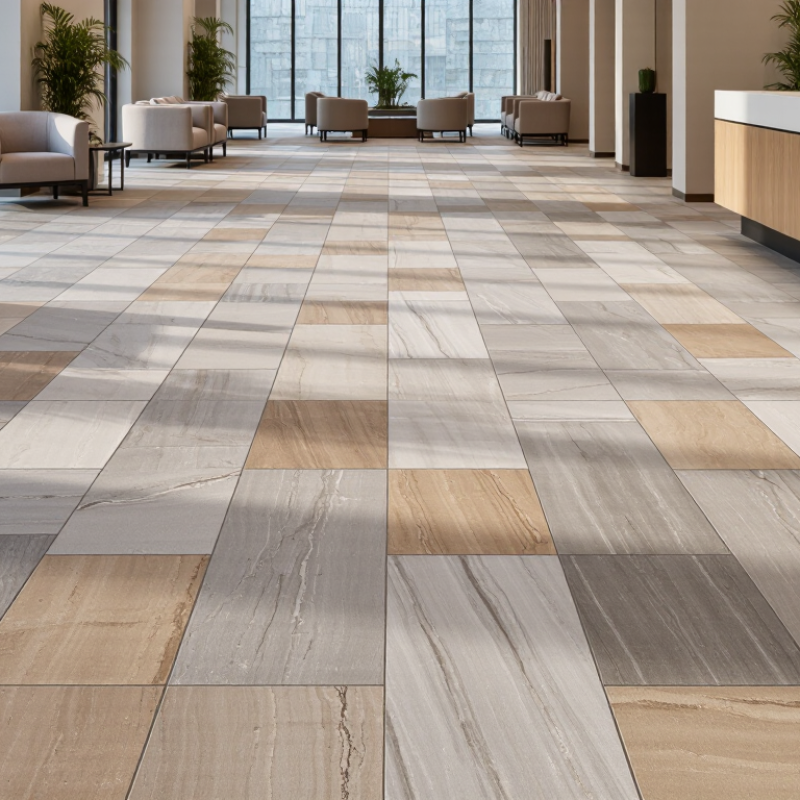
Stone look vinyl flooring is a resilient floor covering designed to resemble natural stone. It usually combines a printed visual layer, a clear wear layer, and a flexible vinyl backing. Embossed surfaces can imitate slate, limestone, marble, or polished concrete. The result feels warmer and softer underfoot than quarried stone. It also weighs less and often requires less structural reinforcement.
Its core characteristics include moisture resistance, easy maintenance, and consistent pattern control. In a real entryway, a damp mop can remove tracked-in dirt without sealing the surface. However, moisture resistance does not excuse poor installation. The subfloor must be clean, dry, and level. Small bumps may become visible over time. Check the wear-layer thickness, slip-resistance data, and installation requirements before ordering. These details matter more than a dramatic product photograph.
The stone effect comes from high-resolution printing and surface texture. Some designs look convincing from standing height, but repeated patterns may appear under bright lighting. That is an honest limitation. Heavy furniture can also leave marks if moved carelessly. Use protective pads and lift furniture instead of dragging it. For global buyers, confirm carton dimensions, replacement availability, and local flooring standards. A sample viewed beside a window often reveals color differences that online images hide.
Stone-look vinyl flooring now offers more than a simple imitation of natural rock. Global buyers can choose from several visual styles, including soft limestone, dramatic marble, warm travertine, and rugged slate. Limestone patterns suit bright rooms with pale walls and light wood furniture. Marble visuals create stronger contrast through flowing veins and polished-looking surfaces. Travertine brings irregular pores and sandy tones, while slate provides darker layers for commercial interiors or modern kitchens. Large plank and tile formats can make small rooms feel more open.
Design options depend on print clarity, texture, plank size, and installation direction. Embossed surfaces add a convincing stone feel underfoot, especially when grain lines match the printed image. Matte finishes usually look more natural than high gloss. Warm gray, beige, charcoal, and muted white provide flexible color choices across different markets. In my project experience, oversized patterns can look impressive in a showroom but feel too busy in a narrow room. That detail deserves a physical sample review.
Tips: Compare samples under daylight and warm indoor lighting. Check the repeat pattern across several pieces. Keep samples nearby. Confirm wear-layer performance for the intended traffic level. Use staggered layouts for a relaxed stone effect, or aligned joints for a cleaner architectural appearance. Slight color variation can improve realism, although excessive variation may create installation waste. Consider it carefully.
| Stone Visual Style | Typical Appearance | Common Color Options | Pattern and Surface Design | Common Formats | Design Applications | Coordination Tip |
|---|---|---|---|---|---|---|
| Marble | Soft or dramatic veining across a polished-looking or matte stone background. | White and gray, beige and cream, charcoal, or muted green. | Fine linear veins, broad cloud-like movement, or high-contrast veining; available with subtle or pronounced visual variation. | Square tiles, rectangular tiles, and large-format tile designs. | Bathrooms, kitchens, entryways, and contemporary living spaces. | Pair strongly veined visuals with simple cabinetry and restrained wall patterns. |
| Limestone | Quiet, natural-looking surface with gentle tonal shifts and a soft, understated appearance. | Warm white, ivory, sand, taupe, and light gray. | Low-contrast shading, fine fossil-like details, or a lightly textured stone effect. | Square tiles and rectangular formats, including designs that suggest larger slabs. | Calm living areas, bedrooms, bathrooms, and relaxed hospitality interiors. | Use warm neutrals and natural wood tones to maintain a soft, cohesive palette. |
| Travertine | Layered, sediment-like markings inspired by the natural variation of travertine stone. | Cream, beige, honey, light brown, and warm gray. | Linear bands, subtle pits or pores in the print design, and gently varied tonal movement. | Rectangular tiles, square tiles, and plank-like formats designed to echo cut stone. | Warm contemporary interiors, hallways, kitchens, and living spaces. | Combine with warm metals, textured fabrics, and mid-tone wood finishes. |
| Slate | Layered, mineral-inspired visuals with a grounded, naturally varied character. | Black, charcoal, blue-gray, graphite, and earthy brown. | Directional striations, subtle tonal shifts, and matte or lightly textured visual finishes. | Square tiles, rectangular tiles, and modular tile layouts. | Entryways, utility areas, modern kitchens, and industrial-inspired rooms. | Balance darker slate visuals with lighter walls, warm lighting, or pale wood accents. |
| Concrete | Urban, cement-inspired surface with a restrained and relatively uniform appearance. | Light gray, mid-gray, dark gray, greige, and soft beige. | Clouded shading, fine speckling, or subtle trowel-like visual variation; commonly shown in matte finishes. | Large square tiles, rectangular tiles, and broad-format designs. | Modern apartments, studios, retail interiors, and minimalist spaces. | Use contrasting textures, such as wood, textiles, or metal, to keep the room from feeling flat. |
| Terrazzo | Composite-style visual featuring decorative chips set against a contrasting base color. | White, cream, or gray bases with black, brown, green, or multicolor chips. | Fine or oversized chip patterns, with different chip densities and color mixes. | Square tiles, rectangular tiles, and larger-format designs. | Bathrooms, cafés, creative workspaces, and playful residential interiors. | Repeat one or two chip colors in accessories or furnishings for a coordinated look. |
| Granite | Speckled, crystalline-inspired appearance with a more granular visual texture. | Black, gray, white, beige, and mixed mineral tones. | Small-scale flecks, mottled color distribution, or more pronounced mineral-like variation. | Square tiles and rectangular tile formats. | Kitchens, utility spaces, entryways, and interiors with a practical, classic aesthetic. | Coordinate the floor with simple surfaces to avoid competing with busy countertops or wall patterns. |
| Limestone and marble blend | A balanced stone visual combining a calm base with restrained, marble-inspired movement. | Ivory, pale gray, greige, and soft beige with gentle veining. | Low-contrast veins over a lightly clouded or softly textured background. | Square and rectangular tiles, depending on the collection design. | Transitional interiors, bathrooms, open-plan living areas, and boutique-style spaces. | Select grout colors close to the main floor tone for a quieter, more continuous appearance. |
Stone-look vinyl flooring combines a printed stone image, a protective wear layer, a resilient core, and a balancing backing. This construction offers a practical surface without quarried stone’s weight. The image layer can reproduce slate edges, limestone movement, or terrazzo-like chips with surprising detail. Texture matters too. Embossed surfaces catch light and reduce the flat appearance common in lower-grade flooring.
Most products use PVC-based layers, mineral fillers, plasticizers, stabilizers, and color pigments. A rigid core improves dimensional stability, while a flexible core can feel warmer underfoot. Wear-layer thickness remains a key performance measure. Thicker layers usually resist scuffs better, but installation quality still decides much of the result. In a sample room, I would check seams, click joints, and edges under angled light. Small gaps become obvious there. Subfloors must be dry, level, and clean; otherwise, bumps may appear through the pattern within months.
For global buyers, moisture resistance supports kitchens, retail spaces, and humid regions, but it does not excuse standing water. Slip resistance, fire documentation, emissions testing, and recycling information should match the destination market. Ask for test reports, not broad claims. Color can shift between batches, especially with printed stone patterns. That weakness deserves planning. Order extra material for repairs, and confirm lot consistency before installation. Performance is measurable, yet real floors remain imperfect.
International buyers should judge stone look vinyl flooring beyond its printed surface. Start with the wear layer, usually measured in mils, because busy retail areas need stronger protection than bedrooms. Check the core construction, locking system, and dimensional stability under changing temperatures. A sample should sit near a window for several days. Color and texture can look different in natural light.
Local requirements also matter. Confirm slip resistance, fire performance, indoor air emissions, and installation rules with qualified professionals in the destination market. Test documents should come from recognized laboratories and match the exact product specification. Do not rely on a generic certificate. That mistake can delay approval.
Shipping conditions deserve equal attention. Ask for carton dimensions, pallet weight, moisture protection, and replacement-piece availability. Long sea routes may expose packages to humidity and rough handling. Strong packaging helps, but it cannot correct poor storage after delivery. Keep cartons flat and allow the flooring to acclimate according to the installation guide.
Design consistency is another practical concern. Request several samples from different production lots when large areas are planned. Printed stone patterns may repeat more often than expected. That can weaken the natural appearance. A lower purchase price may also hide higher installation costs. I would compare total landed cost, not only the factory quotation. Small details, such as matching trims and accurate room measurements, often decide whether an international project runs smoothly.
Stone-look vinyl flooring performs best when installation begins with the subfloor, not the pattern. The surface should be dry, level, clean, and free from loose particles. Moisture wins. Measure moisture before delivery, especially on concrete slabs in humid regions. Let cartons acclimate indoors according to the manufacturer’s instructions. Keep room temperatures stable during fitting. Use the correct adhesive for glue-down products, and leave suitable movement gaps for floating systems. Aligning stone visuals across doorways requires patience and careful dry layout.
Maintenance is practical but not careless. Sweep grit daily in busy entrances, then use a damp mop with a pH-neutral cleaner. Avoid abrasive powders, strong solvents, and excessive water near seams. Felt pads protect flooring beneath heavy furniture. Replace damaged planks instead of hiding deep scratches with wax. Samples can mislead. Natural-looking textures may hold more dirt than smooth surfaces, so test cleaning methods on a spare piece first. The advice is not perfect for every building; traffic, sunlight, and local cleaning habits change performance.
Global buyers should compare wear-layer thickness, total thickness, slip performance, backing quality, and installation method. Request technical sheets, safety documentation, batch information, and clear packing details before placing an order. Confirm carton dimensions, pallet limits, minimum order quantities, production schedules, and replacement-piece availability. Check samples under warm and cool lighting. A small shade difference can become obvious across a large lobby. Reliable suppliers should answer consistently and disclose tolerances. Build extra time into shipping plans, because port delays and customs checks can disrupt installation dates.
Common visuals include limestone, marble, travertine, and slate. Limestone feels soft and bright. Marble adds flowing veins and stronger contrast. Travertine shows pores and sandy colors. Slate offers dark layered patterns.
Large planks or tiles can make a small room feel more open. Pale limestone tones may brighten narrow spaces. Avoid oversized patterns if the room feels crowded. Samples can reveal this better than images.
Realism depends on print clarity, surface texture, and pattern variation. Embossed surfaces add a stone-like feel underfoot. Matching texture with printed lines improves the effect. Excessive repetition can still look artificial.
Typical flooring includes a printed image, wear layer, resilient core, and backing. A rigid core improves dimensional stability. A flexible core may feel warmer underfoot. Check seams, edges, and joints under angled light.
Check the wear-layer thickness for the expected traffic level. Busy retail areas need stronger protection than bedrooms. Thicker layers usually resist scuffs better. Installation quality remains important. It is not magic.
Moisture resistance supports kitchens and humid regions. It does not make the floor suitable for standing water. The subfloor must remain dry, level, and clean. Otherwise, bumps may appear within months.
Ask for reports covering slip resistance, fire performance, indoor air emissions, and recycling information. Documents should match the exact product specification. Use recognized laboratory reports where required. Generic certificates may cause approval delays.
Compare samples in daylight and warm indoor lighting. Request samples from several production lots for large projects. Check repeat patterns across multiple pieces. Order extra material for future repairs. I sometimes underestimate this risk.
Confirm carton size, pallet weight, moisture protection, and replacement-piece availability. Keep cartons flat after delivery. Let the flooring acclimate according to the installation guide. Accurate room measurements reduce waste, though mistakes still happen.
Staggered layouts create a relaxed stone appearance. Aligned joints look cleaner and more architectural. Choose based on the room’s furniture and proportions. Matching trims also improve the finished result. Small details matter.
Stone Look Vinyl Flooring combines the natural appearance of stone with the practical benefits of modern resilient flooring. Designed to replicate materials such as marble, slate, limestone, and travertine, it offers a wide range of colors, textures, patterns, and surface finishes for residential and commercial interiors. Its multilayer construction commonly includes a durable wear layer, decorative printed film, resilient core, and stabilizing backing, providing comfort underfoot, moisture resistance, easy cleaning, and reliable performance in high-traffic areas.
For international buyers, important considerations include product quality, thickness, wear resistance, slip performance, dimensional stability, packaging, and compatibility with local installation methods. Buyers should also evaluate climate conditions, transportation requirements, technical documentation, and applicable market standards. Depending on the product format, installation may use click-lock, glue-down, or loose-lay methods. Routine sweeping, prompt spill removal, and manufacturer-approved cleaning practices can help preserve the floor’s appearance. Careful supplier communication and quality inspection are essential for successful global sourcing.
