
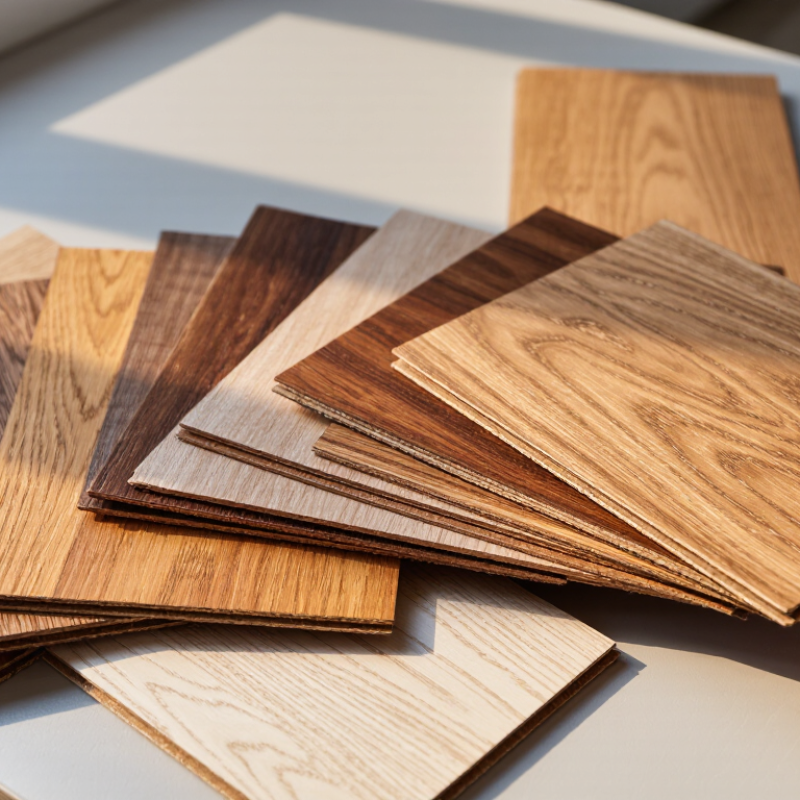
Choosing a China supplier for Wood Like Vinyl Flooring takes more than comparing glossy catalog photos. A convincing oak pattern can look different under warehouse lighting, beside a real wood sample, or after installation. Buyers should examine wear-layer specifications, surface texture, dimensional stability, and the consistency of printed designs. Ask for physical samples. Check them in the room where the flooring will be used.
A dependable supplier should explain its manufacturing process clearly and provide current product data, quality-control details, and relevant test reports. Confirm whether the company manufactures the flooring or works as a trading partner, since that affects communication, customization, and order coordination. Request details on product construction, installation requirements, packaging, and replacement procedures before discussing price alone. Small details matter. A low quotation may not include the same core material, thickness, or service.
This guide looks at how to compare China’s Wood Like Vinyl Flooring suppliers with practical questions rather than broad promises. It considers product range, sample evaluation, production capacity, communication, and after-sales support. Buyers can also use the outline to prepare a clear request for quotation and compare offers on consistent terms. No checklist can remove every risk, and supplier claims still need verification. That part takes time. Yet careful checks can reveal whether a supplier’s product and service fit the project, its budget, and its expected daily use.
China Best Wood Like Vinyl Flooring Suppliers?
What Wood-Look Vinyl Flooring Includes
Wood-look vinyl flooring is a surface style, not one single product type. It includes luxury vinyl planks, vinyl tiles, and sheet vinyl printed with wood patterns. Planks often have defined edges that resemble separate boards, while sheet flooring creates fewer seams. Some products use an SPC or WPC core; others have a more flexible construction. Their appearance can suggest oak grain or weathered boards, but the material itself is vinyl.
Tips: Compare a sample with your room’s lighting. Check the wear-layer specification, core type, surface texture, and installation requirements. A thicker plank is not automatically more durable. Ask whether underlayment is attached, since that can affect floor height and fitting.
When reviewing supplier options, request clear product data and installation guidance for the exact flooring type. Look closely at the sample’s grain repeat, edge detail, and finish; a pattern that looks convincing in a small photo may repeat noticeably across a wide floor. Consider moisture exposure and subfloor condition before choosing a product. One detail is easy to miss: a realistic wood image does not guarantee a textured surface. Some finishes feel smooth, and that may matter underfoot.
| Flooring type | What it includes | Common format | Typical installation | Practical considerations |
|---|---|---|---|---|
| Luxury vinyl plank (LVP) | Vinyl planks printed with wood-grain imagery, usually protected by a transparent wear layer. | Individual planks in varied lengths and widths. | Click-lock floating floor or glue-down, depending on the product. | A common choice for wood visuals; wear-layer thickness, core, and installation requirements vary by product. |
| Luxury vinyl tile (LVT) with wood visuals | Vinyl tiles with printed designs that imitate wood boards or parquet patterns. | Square or rectangular tiles; some ranges use plank-shaped pieces. | Often glue-down; some products use click-lock installation. | Tile format can support patterned layouts. Confirm whether the product is intended for residential or commercial use. |
| SPC rigid-core vinyl | A vinyl floor with a rigid stone-plastic composite core and a wood-look printed surface. | Usually plank-shaped, with a click-lock edge system on many products. | Commonly installed as a floating floor over a suitable, prepared subfloor. | The rigid core helps resist indentation, but it does not remove the need to follow subfloor-flatness and expansion-gap instructions. |
| WPC rigid-core vinyl | A vinyl floor with a wood-plastic composite core, a printed decorative layer, and a protective wear layer. | Typically planks; some products include an attached underlayment. | Often a floating click-lock installation. | The core is generally thicker than many standard vinyl constructions. Check the product instructions for suitable rooms and subfloors. |
| Sheet vinyl with wood-look print | A continuous resilient vinyl sheet printed with a wood-board pattern. | Large rolls cut to fit the room. | Installed as a sheet; adhesive and seam requirements depend on the product and room. | Fewer seams than plank formats can be useful in some spaces. Accurate measurement and fitting are important. |
| Glue-down vinyl plank | Wood-look vinyl planks secured directly to the subfloor with a compatible adhesive. | Separate planks, commonly supplied in cartons. | Full-spread or other specified adhesive installation. | Subfloor preparation and adhesive selection are critical; follow the flooring and adhesive manufacturers’ instructions. |
Note: Construction, dimensions, wear-layer specifications, water-resistance claims, and installation methods vary by product. Check the product data sheet and installation guide before selection.
It includes vinyl planks, tiles, and sheet flooring printed with wood patterns. Planks resemble separate boards; sheet flooring has fewer seams.
Not always. Some finishes feel smooth, even when the printed grain looks textured. Check a sample underfoot.
No. Compare the wear layer, core, and product specifications. Thickness alone tells only part of the story.
Check its core type, wear-layer details, surface texture, and installation requirements. Also ask whether underlayment is attached, since it can change floor height.
Compare several pieces in daylight and warm indoor light. Look for repeated grain, knots, color shifts, and edge details. Repeats can stand out across a wide room.
Request a current specification sheet, test reports, installation guidance, and a dated sample. Make sure documents describe the exact product construction.
Keep an approved sample and request a written approval process. Ask how production shade variation is checked. Samples still may not match perfectly.
Clarify carton labels, pallet protection, lead time, and damage-claim procedures. Allow extra schedule time; logistics can shift.
Consider moisture exposure, subfloor condition, and lighting. I may be overvaluing the sample’s appearance; the installed floor can feel different.
Wood Like Vinyl Flooring offers the natural appearance of timber with the practical features of vinyl, and it may come in different formats, surface textures, wear layers, and installation systems. Understanding these options is a useful first step when sourcing products from China. The country’s supply chain can involve raw-material producers, flooring manufacturers, and export teams, so buyers should clarify who handles each stage and how production, sampling, and shipping are coordinated.
When evaluating suppliers, compare their manufacturing capabilities, product consistency, communication, and experience with your intended market. Ask for samples and review specifications, test reports, and applicable compliance documents to confirm that products meet your requirements. Compare quotes on an equivalent basis, including product construction, packaging, order quantities, lead times, payment terms, and shipping arrangements. A clear comparison helps you choose a reliable long-term partner rather than focusing on price alone.
