
Choosing Vinyl Flooring For Bedrooms in 2026 requires more than matching a plank to the bed frame. The floor should feel comfortable under bare feet, resist daily wear, and support a healthy indoor environment. Bedroom flooring also faces quieter challenges, including rolling office chairs, pet claws, sunlight, and occasional spills. These details matter.
Flooring expert John McGrath offers a practical principle: “The right resilient floor must balance performance, comfort, and responsible material choices.” That advice is useful here. Look for vinyl products with low-VOC certifications, such as FloorScore or GREENGUARD Gold, when available. Check the wear layer, too. A thicker wear layer can improve durability, but it does not automatically guarantee better comfort. Construction matters. Rigid SPC may feel firm, while WPC often feels warmer and softer underfoot.
Touch the sample in natural light. Walk on it barefoot. Notice the surface texture. A bedroom can expose flaws that a bright showroom hides. I once assumed a darker oak pattern would feel more luxurious, but it made a small room appear closed in. That judgment can change with wall color, daylight, and furniture placement. Nothing is completely foolproof.
This guide will compare plank thickness, wear layers, waterproof performance, acoustic underlayments, installation methods, maintenance needs, and design trends for 2026. It will also question popular claims. “Waterproof” does not mean indestructible. Budget flooring may look convincing at first, yet weak locking systems can create visible gaps later. The best choice is the one that fits your room, habits, budget, and tolerance for compromise.
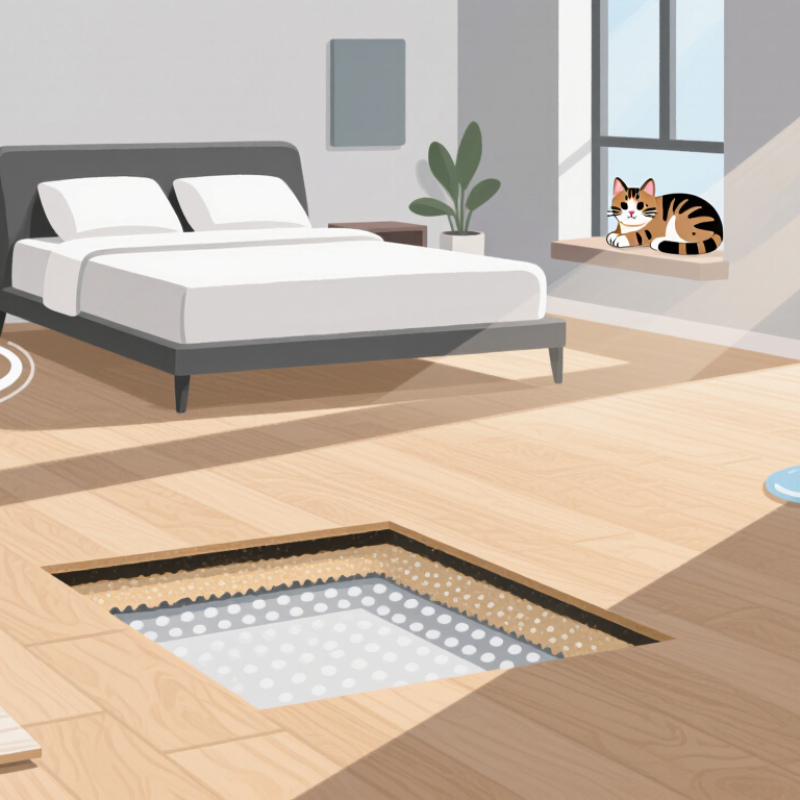
Choosing the best vinyl flooring for bedrooms in 2026 begins with comfort, safety, and daily habits. Quality vinyl should feel warm enough under bare feet and reduce the sharp sound of footsteps. A resilient surface also helps beside beds, where furniture may shift during cleaning. Look for slip resistance, low emissions, and a stable wear layer. These details matter more than a fashionable pattern alone.
Tips:
Place a sample near the window and under a lamp. Observe its color at morning and night. Choose a textured finish if children, older adults, or pets use the room. Ask for verified technical data, including wear-layer thickness, indoor-air certifications, and cleaning guidance. Check that the subfloor is dry and level before installation. Small uneven areas can become visible later.
For style, wood and stone visuals can make a bedroom feel calmer without demanding much maintenance. Pale tones may enlarge a dark room, while warm gray can balance strong wall colors. Use acoustic underlayment when footsteps or rolling furniture could disturb nearby sleepers. I have found that easy cleaning is valuable, especially around bedside tables and dusty corners. Still, no flooring is perfect. Glossy surfaces show marks quickly, and heavily textured designs can hold fine dirt. Review installation instructions carefully, because poor preparation can shorten the floor’s useful life.
Luxury vinyl plank offers realistic wood texture, simple replacement, and comfortable walking under bare feet. Its narrow boards suit bedrooms with traditional or modern furniture. Luxury vinyl tile can imitate stone while providing easier cleaning than natural materials. Sheet vinyl creates fewer seams, which helps resist dust and occasional spills. It can feel less luxurious, though.
Choose based on the room’s daily conditions, not only appearance. A thicker wear layer usually supports better long-term resistance to scratches and dents. Rigid-core flooring can hide minor subfloor irregularities, but it still needs a reasonably flat surface. Soft-core options may feel warmer and quieter. Installation quality affects both results and reliability.
In bedroom inspections, I look for a stable subfloor, careful edge cuts, and secure transitions. Poor preparation can cause clicking sounds or visible gaps later. Underlayment may improve sound and comfort, but compatibility must be checked with the flooring instructions. Some products feel warmer than expected, while others remain cool during winter mornings. That detail is easy to overlook. Light colors can make a small bedroom appear larger, yet they may show dust quickly. Darker textures hide minor marks better, but scratches can become more noticeable under strong sunlight. My own preference has changed after living with both types: attractive flooring is not always the most restful choice.
How to Choose the Best Vinyl Flooring for Bedrooms in 2026?
Key Features to Compare Before Choosing Vinyl Flooring
Start with comfort, safety, and everyday durability. A bedroom floor should feel warm enough under bare feet and remain quiet at night. Compare total plank thickness, attached underlayment, and the wear-layer rating. Thicker flooring can hide minor subfloor flaws, but it cannot correct serious unevenness. Check the installation guide carefully. Some products need a perfectly level surface.
Indoor air quality deserves close attention. Look for transparent material disclosures and independently tested low-emission claims. Avoid relying only on phrases like “eco-friendly.” They can mean very little without supporting documents. A bedroom also benefits from a matte, slip-resistant surface, especially near windows or ensuite bathrooms. Light colors may make a small room appear larger, but they show dust quickly.
Test samples inside the actual bedroom. View them in daylight, lamplight, and evening shade. Colors can change dramatically. Run your fingers across the joints and listen for hollow sounds after tapping the sample over underlayment. No floor wins every test. I would also check heating compatibility before installation, because some vinyl products can warp under excessive heat. Measure door clearance, skirting gaps, and furniture weight. These details are easy to miss. A beautiful floor can still disappoint when doors scrape or seams open. Choose verified specifications over attractive photography, and keep a spare plank for future repairs.
| Feature to Compare | Why It Matters in a Bedroom | Glue-Down LVT | Click-Lock LVP | SPC Rigid Vinyl | WPC Rigid Vinyl |
|---|---|---|---|---|---|
| Typical Overall Thickness | Affects comfort, sound control, door clearance, and subfloor height. | Approximately 2–3 mm; requires a smooth, well-prepared subfloor. | Approximately 4–6 mm, often with an attached underlayment. | Approximately 4–6.5 mm; the rigid core helps cover minor surface irregularities. | Approximately 5–8 mm; generally provides a thicker, softer floor profile. |
| Wear-Layer Thickness | Controls resistance to scuffs, scratches, and everyday household traffic. | Common residential ranges are 0.20–0.30 mm; select thicker layers for long-term use. | Common residential ranges are 0.20–0.50 mm. | Common residential ranges are 0.30–0.50 mm. | Common residential ranges are 0.30–0.50 mm. |
| Walking Comfort | Bedrooms benefit from a warmer, quieter, and more comfortable surface underfoot. | Moderate; comfort depends strongly on the subfloor and adhesive installation. | Moderate to good, especially with quality underlayment. | Firm and stable, but usually less cushioned than WPC. | Very good; the foamed core generally provides a softer feel. |
| Sound Reduction | Helps reduce footfall noise and impact sound, particularly in upper-floor bedrooms. | Moderate; additional acoustic underlayment may be required. | Moderate to good when paired with an approved acoustic underlayment. | Moderate; rigid construction can transmit more impact sound without underlayment. | Good relative to other rigid vinyl options because of its foam core. |
| Water Resistance | Protects the floor from spills, damp cleaning, and occasional moisture. | Water-resistant surface; seams and perimeter should be installed correctly. | Usually water-resistant; locking joints must be properly engaged. | Highly water-resistant surface and rigid core; not a substitute for a waterproof subfloor. | Highly water-resistant surface and core; follow the installation limits for moisture exposure. |
| Subfloor Preparation | Flatness affects appearance, joint performance, and long-term durability. | Highest preparation requirement; imperfections may telegraph through the flooring. | Requires a clean, dry, and reasonably flat subfloor. | More forgiving of minor imperfections, but major unevenness must still be corrected. | More forgiving of minor imperfections, but major unevenness must still be corrected. |
| Installation Method | Installation difficulty affects project time, labor cost, and future replacement. | Adhesive installation; suitable for permanent installations and complex room layouts. | Floating click-lock installation; suitable for many DIY projects. | Floating click-lock installation; panels are generally rigid and easy to align. | Floating click-lock installation; thicker boards may be easier to handle but require clearance. |
| Temperature Stability | Important near windows, radiant heating, and rooms with seasonal temperature changes. | Good dimensional stability when installed with the correct adhesive and expansion details. | Good when expansion gaps and manufacturer temperature limits are followed. | Very good dimensional stability due to the stone-plastic composite core. | Good, although its softer core may require more careful handling during installation. |
| Radiant Floor Heating | Compatibility prevents heat-related damage and helps maintain indoor comfort. | Often compatible, subject to adhesive and flooring temperature limits. | Often compatible, subject to product instructions and maximum surface-temperature limits. | Often compatible, subject to product instructions and maximum surface-temperature limits. | Often compatible, subject to product instructions and maximum surface-temperature limits. |
| Scratch and Dent Resistance | Protects the floor from bed frames, furniture movement, and pet activity. | Depends mainly on wear-layer thickness and surface coating. | Good with a thicker wear layer and suitable furniture protectors. | Good resistance to indentation because of the dense rigid core. | Good surface scratch resistance, but the softer core can be more vulnerable to heavy point loads. |
| Maintenance | Simple care is desirable in bedrooms and helps preserve the finish. | Sweep or vacuum regularly and damp-mop with a vinyl-safe cleaner. | Sweep or vacuum regularly and damp-mop with a vinyl-safe cleaner. | Sweep or vacuum regularly and damp-mop with a vinyl-safe cleaner. | Sweep or vacuum regularly and damp-mop with a vinyl-safe cleaner. |
| Best Bedroom Use Case | Helps match the construction to the room’s comfort, noise, and installation priorities. | Best for a permanent, low-profile installation with a carefully prepared subfloor. | Best for balanced comfort, convenient installation, and broad residential use. | Best for high dimensional stability, furniture loads, and slightly uneven subfloors. | Best for homeowners prioritizing softness, warmth, and acoustic comfort. |
| Key Buying Check | Specifications vary by product, so the technical sheet should be checked before purchase. | Verify adhesive compatibility, wear layer, floor flatness requirements, and subfloor moisture limits. | Verify locking system, attached pad specifications, expansion gaps, and acoustic rating. | Verify core density, wear layer, transition requirements, and temperature limits. | Verify core construction, furniture-load guidance, wear layer, and temperature limits. |
| General comparison only: actual performance depends on product construction, installation quality, subfloor conditions, room temperature, and compliance with the manufacturer’s technical instructions. | |||||
Choosing vinyl flooring for a bedroom should begin with your daily habits, not only its color. A calm bedroom often suits warm oak tones, soft beige, or muted gray. These shades support natural light and make small rooms feel less crowded. If your furniture is dark, a lighter floor can prevent the space from feeling heavy. For minimalist rooms, wider planks create cleaner visual lines. Small patterns may look attractive in samples but feel busy across an entire floor.
Lifestyle matters just as much. If children or pets enter the bedroom, choose a durable wear layer and a textured surface for better everyday grip. A cushioned underlay can reduce footsteps and make cold mornings more comfortable. Check the product’s moisture resistance, cleaning instructions, and indoor air certifications before buying. Reliable technical documents matter more than attractive advertising. Measure the room carefully, including closets and door clearances.
I once preferred a glossy finish because it looked modern. It showed dust and footprints too easily. A matte surface proved more practical. That choice was not perfect either; darker colors revealed lint near the bed. Think about sunlight, cleaning time, and furniture movement. Place sample boards beside your curtains and bedding at different hours. Colors change noticeably. A bedroom floor should support restful routines, not compete with them.
Wear-layer thickness is a practical way to match vinyl flooring with bedroom use. A 6 mil layer is generally suitable for low-traffic rooms, while 12 mil works well for shared bedrooms and everyday residential use. Bedrooms with pets, rolling furniture, or heavier use typically benefit from a 20 mil wear layer. Choose matte wood visuals for calm, traditional interiors and lighter wide-plank designs to make compact bedrooms feel more spacious.
Choosing vinyl flooring for a bedroom involves more than matching a wood pattern to the bed frame. Installation quality affects comfort, noise, and lifespan. The subfloor should be dry, firm, and reasonably level before any planks are placed. Small bumps may later feel like stones under bare feet. Allow the flooring to acclimate indoors as the installation guide requires. Click-lock planks can simplify replacement, while glue-down flooring may feel more stable in large rooms. An experienced installer should inspect door clearances and leave proper expansion gaps.
Maintenance is usually simple, but neglect still causes damage. Sweep grit regularly, especially near the bedroom entrance. Grit acts like fine sandpaper beneath moving furniture. Clean spills promptly with a lightly damp microfiber mop. Avoid soaking the seams. Felt pads can protect the surface, although they do not excuse dragging a heavy wardrobe. Direct sunlight may gradually change color, so curtains or blinds can reduce uneven fading.
Long-term value depends on more than the purchase price. A thicker wear layer may justify a higher cost in homes with pets, children, or frequent furniture movement. However, paying for extreme durability in a rarely used guest room may be wasteful. I would also question dramatic waterproof claims when poor installation leaves gaps around walls. One practical mistake is choosing a soft underlayment without checking compatibility. It can create movement, hollow sounds, or weak joints. Keep spare planks from the same batch if storage space allows. Shade variations can make future repairs surprisingly visible.
It should feel comfortable under bare feet and reduce sharp footstep sounds. A stable wear layer supports everyday use. Quiet matters at night.
Choose a matte, slip-resistant surface, especially near bathrooms or windows. Low-emission materials can support better indoor air quality. Request verified documents.
Place it near a window and beneath a lamp. Check it during morning, evening, and artificial light. Colors can change dramatically.
It may hide minor imperfections, but it cannot fix serious unevenness. Small bumps can feel like stones under bare feet. The subfloor must remain dry and level.
Check door clearance, skirting gaps, furniture weight, and expansion spaces. Allow the flooring to acclimate as instructed. Poor preparation can shorten its useful life.
Use compatible acoustic underlayment when footsteps or rolling furniture disturb sleepers. Avoid soft underlayment without checking compatibility. It may create movement or hollow sounds.
Sweep grit regularly, especially near the entrance. Use a lightly damp microfiber mop for spills. Do not soak the seams.
Felt pads reduce scratches beneath furniture legs. Never drag a heavy wardrobe across the surface. Curtains can limit uneven fading from direct sunlight.
Not necessarily. A thicker wear layer may help homes with pets, children, or moving furniture. It may be wasteful in a rarely used guest room.
Store spare planks from the same production batch, if possible. Later replacements may show shade differences. I sometimes underestimate that detail.
Choosing the best Vinyl Flooring For Bedrooms requires balancing comfort, safety, style, and durability. A bedroom floor should feel pleasant underfoot, help create a quiet and relaxing atmosphere, and provide reliable resistance to daily wear. Different vinyl options, including planks, tiles, and sheets, offer unique benefits in appearance, water resistance, installation flexibility, and ease of cleaning. When comparing products, consider thickness, wear-layer strength, surface texture, slip resistance, sound reduction, low-emission materials, and compatibility with underfloor heating.
The right design should complement the bedroom’s colors, furniture, and overall mood while matching the household’s lifestyle. Soft wood-look patterns can create warmth, while simple stone-inspired designs offer a modern appearance. Before installation, evaluate subfloor condition, room measurements, and whether professional help is needed. Regular sweeping, prompt spill cleanup, and occasional gentle mopping can preserve the floor’s appearance. By considering performance, maintenance requirements, installation costs, and expected lifespan, homeowners can choose a practical vinyl flooring solution that delivers lasting comfort and value.
