
How to Choose Tile Effect Vinyl Flooring in 2026?

Time:2026-10-14 Author:Sophia
0%

Choosing Tile Effect Vinyl Flooring in 2026 requires more than matching a pattern to your kitchen walls. Modern products can imitate limestone, terrazzo, slate, and handmade ceramic tiles with surprisingly realistic texture. Yet appearance is only one part of a reliable flooring decision.

In practical projects, I have found that room conditions often matter more than showroom lighting. A busy hallway may need a stronger wear layer, while a quiet guest bathroom may prioritise comfort and water resistance. Check the manufacturer’s technical sheet, not only the product photograph. Look for suitable subfloor requirements, dimensional stability, slip-resistance information, and cleaning guidance. Small details matter. Uneven concrete can create visible shadows beneath thin planks or tiles. Cold rooms can also affect installation and comfort.

Colour deserves careful attention. Soft greige may hide dust better than bright white, but it can look dull under weak daylight. Dark slate effects create drama, although they may reveal lint and water marks. Sample boards should be viewed beside cabinets, doors, and natural light. Do not trust one shop light.

A realistic tile pattern can also expose poor alignment. Measure carefully and plan the layout before cutting. Professional installation improves the finish, but a skilled DIY installer may succeed with proper preparation and patience. I would not claim one design suits every home. That would be misleading. Product quality varies, and online reviews can be incomplete. Compare verified specifications, warranty terms, and independent installation advice before choosing Tile Effect Vinyl Flooring for your 2026 project.
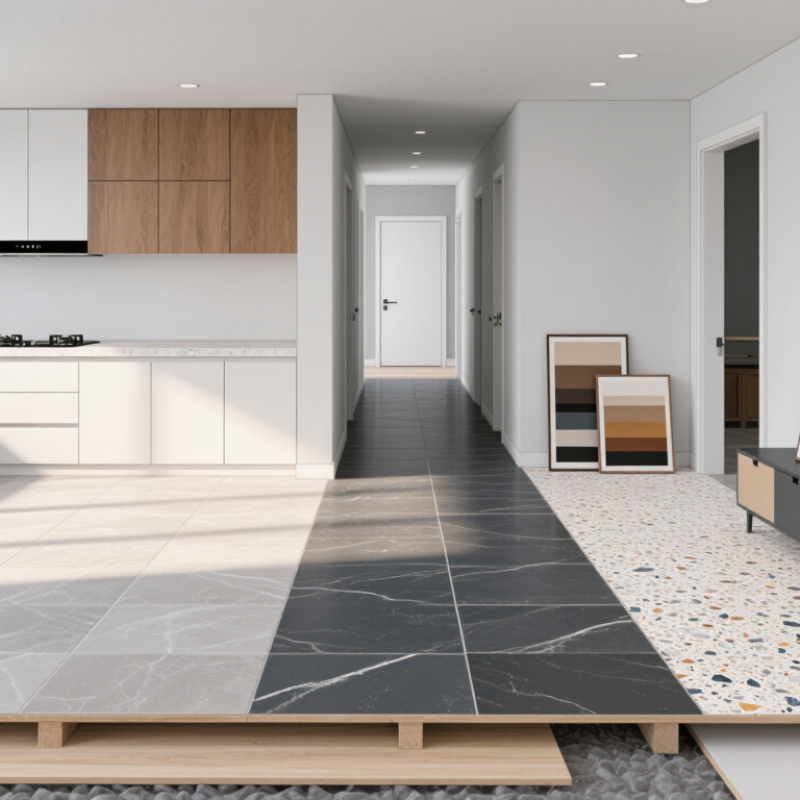
How to Choose Tile Effect Vinyl Flooring in 2026?

Understanding Tile Effect Vinyl Flooring and Its Main Styles

Tile effect vinyl flooring combines a printed design with flexible, water-resistant layers. It can imitate ceramic, stone, marble, or patterned encaustic tiles. Modern embossing adds shallow texture, so the surface feels less flat beneath bare feet. In my experience, matte finishes hide dust better than glossy ones. Small errors show quickly.

The main styles create different room impressions. Marble effect brings pale veins and a formal appearance to bathrooms or entrance halls. Slate and stone effects offer uneven colour, making busy kitchens feel more practical. Ceramic effects usually feature clean squares, soft neutrals, and familiar grout lines. Encaustic patterns add stronger character, but repeated motifs may look artificial across a large room. Timber-look plank patterns are not technically tile effects, yet they can suit open-plan spaces needing a warmer visual balance.

Choosing well requires more than matching a sample to a wall. Check the wear layer, surface texture, slip information, and cleaning guidance on the product specification. Measure the room carefully, including awkward corners and door thresholds. A tile pattern can make a narrow space appear wider when laid across its shorter visual lines. However, bold grout lines may exaggerate uneven walls. Professional fitting helps keep joints aligned, although no installation removes every small variation. I would view a large sample in daylight and warm evening light before deciding. Floor colour changes noticeably.

How to Choose Tile Effect Vinyl Flooring in 2026?

Understanding Tile Effect Vinyl Flooring and Its Main Styles

How to read the chart: The values show the nominal face area of common visual tile formats. Larger formats create fewer visible joints, while smaller formats can produce a more detailed, patterned appearance. Actual vinyl tile dimensions vary by product, so always check the technical specification before installation.

  • Encaustic and geometric styles: Smaller 20 × 20 cm modules highlight repeating patterns and work well in kitchens, bathrooms, and feature zones.
  • Brick and metro styles: 30 × 60 cm modules create a familiar rectangular layout with a more directional appearance.
  • Marble and natural-stone styles: 60 × 60 cm modules offer a balanced layout with fewer grout lines.
  • Large-format stone styles: 45 × 90 cm modules create a spacious, contemporary look and can make rooms appear less visually segmented.

Selection tip: Choose the visual format first, then compare wear layer, slip resistance, water resistance, installation method, and cleaning requirements for the intended room.

Assessing Room Needs, Traffic Levels, and Moisture Exposure

How to Choose Tile Effect Vinyl Flooring in 2026?

Choose tile-effect vinyl by room stress, not appearance alone. A quiet guest room may need comfort and easy cleaning. An entryway needs stronger wear resistance, stable seams, and a surface that hides grit.

Floor Covering Weekly’s 2024 State of the Industry report valued U.S. resilient flooring sales at roughly 9 billion dollars in 2023. That scale reflects demand, but it does not make every product suitable for heavy use. Check the wear layer, warranty exclusions, installation method, and subfloor requirements. A thicker wear layer usually supports busier spaces, although thickness alone is not a complete performance test.

Moisture changes the decision. Bathrooms, laundry rooms, and basements need tightly fitted joints and a dry, level subfloor. “Water-resistant” does not mean flood-proof.

EPA moisture-control guidance recommends indoor humidity below 60%, ideally between 30% and 50%, because persistent dampness can encourage mold growth. I have seen attractive tile patterns fail when water entered around poorly sealed edges. That detail is easy to miss.

In kitchens, choose textures that clean without trapping grease. In hallways, sample the floor under footwear and rolling loads before ordering.

ASTM F710 installation guidance also stresses concrete moisture testing; skipping it can create costly problems beneath a convincing stone effect. A small sample can mislead. Inspect the real room’s traffic, sunlight, cleaning habits, and moisture exposure first.

Comparing Vinyl Construction, Tile Designs, and Surface Finishes

How to Choose Tile Effect Vinyl Flooring in 2026?

Tile-effect vinyl flooring is not one uniform product. Its construction changes comfort, stability, and repairability. A multilayer plank usually combines a printed film, protective wear layer, stabilising core, and backing. Thicker wear layers suit busy kitchens and hallways. Rigid cores can reduce movement over imperfect subfloors, but they do not correct serious dips. Measure the floor carefully.

Market forecasts show why choices are expanding. Grand View Research valued the global vinyl flooring market at approximately $40.79 billion in 2023, with a projected 7.7% CAGR from 2024 to 2030. Allied Market Research estimated $30.2 billion in 2021 and forecasts $51.6 billion by 2031. Estimates differ because researchers define products differently. That difference deserves attention.

Tile design affects the room more than many samples suggest. Large stone visuals can make a narrow bathroom feel calmer, while small patterns add visual rhythm. Check repeat length beside a doorway. Repeated marble veining may look artificial under bright light. Matte finishes hide footprints better than gloss. Embossed surfaces improve texture, but they can hold fine grit. A polyurethane finish may simplify routine cleaning, while stronger protective layers usually cost more. Request a full-size sample and view it near a window, not only under showroom lighting. I have found that grout-effect lines often look convincing from standing height, yet uneven walls expose their printed nature. That is not a failure, but it should shape expectations.

Choosing Suitable Colors, Patterns, Sizes, and Installation Methods

Tile effect vinyl flooring can imitate stone, ceramic, or terrazzo, but the wrong design may make a room feel busy. Choose colors from the room’s fixed elements, such as cabinets, walls, and worktops. Warm beige softens north-facing rooms. Cool gray suits clean, modern interiors. The Freedonia Group’s 2024 flooring analysis identifies resilient flooring as a major renovation category, partly because homeowners seek durable, low-maintenance surfaces. Still, market popularity does not guarantee a good match.

Pattern scale matters. Small rooms usually benefit from restrained grout lines and medium tiles, around 300–450 millimeters wide. Large rooms can handle bold geometric patterns. A printed stone pattern should repeat naturally across several planks. View samples beside a window, not only under showroom lighting. I once underestimated this difference. Dark grout effects can also highlight dust, especially near entrances.

Tips: Order full-size samples and test them beside furniture. Check the subfloor moisture level before installation. ASTM F2170 testing is widely used for concrete moisture assessment. Click-lock flooring may suit a stable, level subfloor and faster installation. Glue-down flooring can provide better dimensional control, but it needs careful adhesive selection and skilled preparation. Loose-lay options may simplify replacement, yet movement can occur on uneven surfaces. Follow the flooring manufacturer’s technical guidance and relevant RFCI installation practices. Do not rush the base preparation. That is where many attractive floors fail.

How to Choose Tile Effect Vinyl Flooring in 2026? - Choosing Suitable Colors, Patterns, Sizes, and Installation Methods

Typical selection guidance for tile-effect vinyl flooring. Always confirm the flooring manufacturer's installation instructions, subfloor requirements, and moisture limits before purchase.
Room or Use Area Recommended Color Family Suitable Tile Pattern Common Tile Size Recommended Product Specification Suitable Installation Method Key Benefits Important Considerations
Small Bathroom Soft white Light grey Warm beige Small-format stone effect, terrazzo effect, or subtle geometric grid 300 × 300 mm to 450 × 450 mm Water-resistant vinyl; textured or embossed surface; wear layer of approximately 0.30–0.50 mm for normal residential use Click-lock planks or tiles on a dry, level subfloor; glue-down tiles where a stable fixed layout is preferred Lighter colors can make a compact room appear more open and improve reflected light. Vinyl flooring is water-resistant, but exposed joints and perimeter edges still require careful sealing where recommended.
Large Bathroom Medium grey Greige Charcoal accents Large-format marble effect, concrete effect, or linear stone pattern 450 × 450 mm to 600 × 600 mm Water-resistant rigid-core or glue-down vinyl; wear layer of approximately 0.50 mm for busy households Click installation for faster fitting; glue-down installation for reduced movement around fixed bathroom furniture Larger visual units create fewer apparent grout lines and a calmer appearance. Check that the subfloor is flat enough for the selected product; rigid-core systems do not correct major floor irregularities.
Kitchen Warm oak Natural stone Mid-tone grey Slate effect, limestone effect, terrazzo effect, or wood-look tile grid 300 × 600 mm, 450 × 450 mm, or 600 × 600 mm Wear layer of approximately 0.50 mm for regular family use; textured finish can help disguise minor marks Glue-down tiles for complex layouts; click tiles for clean, rapid installation over a suitable prepared subfloor Mid-tone colors and varied patterns are practical for concealing everyday crumbs and light scuffs. Leave the required expansion gap for floating floors and protect the surface from dragging heavy appliances.
Open-Plan Living Area Greige Natural oak Taupe Large stone effect, subtle terrazzo, or continuous wood-effect tile layout 600 × 600 mm or 600 × 1200 mm visual format Wear layer of 0.50 mm or greater for higher foot traffic; rigid-core construction can provide dimensional stability Floating click system for efficient installation; glue-down method for large areas requiring a firmly fixed floor Neutral colors coordinate with furniture changes and help create visual continuity between zones. Use transition planning at doorways and follow the product's maximum recommended uninterrupted installation area.
Entryway or Hallway Medium grey Slate Earth brown Slate, concrete, quarry-tile, or small geometric pattern 300 × 600 mm or 450 × 450 mm Wear layer of approximately 0.50–0.70 mm for frequent foot traffic; embossed texture may improve visual and tactile realism Glue-down installation for high-traffic stability; click installation where a floating floor is permitted Darker mid-tone patterns are more forgiving of tracked-in dirt than very pale, uniform surfaces. Use entrance mats to reduce grit, which can contribute to surface scratching over time.
Dining Area Warm beige Terracotta Soft brown Terracotta tile effect, patterned encaustic effect, or warm limestone effect 300 × 300 mm to 450 × 450 mm Wear layer of approximately 0.50 mm; stain-resistant protective finish is useful for food and drink areas Glue-down tiles suit intricate patterns; click tiles are convenient for renovation projects with limited installation time Warm colors make the dining area feel comfortable and visually distinct without requiring a separate floor material. Use protective pads beneath chair legs and lift furniture instead of sliding it across the floor.
Home Office Light oak Natural beige Cool grey Quiet concrete effect, straight wood-look tile pattern, or fine terrazzo 450 × 900 mm or 600 × 1200 mm visual format Wear layer of approximately 0.30–0.50 mm for typical residential office use; smooth surface for easier chair movement Click installation for a low-disruption update; glue-down installation beneath built-in furniture where appropriate Low-contrast patterns reduce visual distraction and work well with desks, shelving, and office chairs. Hard caster wheels can mark some resilient floors; use a suitable chair mat or soft-floor casters where needed.
Utility or Laundry Room Medium grey Blue-grey Stone beige Concrete effect, slate effect, or simple square tile pattern 300 × 600 mm or 450 × 450 mm Water-resistant vinyl with a wear layer of approximately 0.30–0.50 mm; select a product approved for the room's moisture conditions Glue-down installation provides a firmly fixed surface; click systems can be used only when the product instructions allow them Cool neutral shades create a clean appearance and pair easily with white appliances. Do not install over damp concrete or areas with active water ingress; moisture testing and subfloor preparation are essential.
Rental or Temporary Renovation Light grey Neutral stone Pale oak Simple stone effect, broad plank effect, or low-contrast checkerboard 450 × 450 mm or 450 × 900 mm Loose-lay or click vinyl where permitted; select a product with a stable backing and appropriate residential wear rating Floating click installation or approved loose-lay installation; avoid permanent adhesive if the floor must be removable Neutral designs have broad decorating appeal and can be replaced or relocated more easily than glued flooring. Confirm permission from the property owner and protect the original floor if the installation method requires it.
High-Traffic Family Zone Mid-tone greige Slate grey Mixed terrazzo Variegated terrazzo, slate, concrete, or multi-tone stone effect 450 × 450 mm to 600 × 1200 mm visual format Wear layer of 0.50–0.70 mm or greater, depending on household traffic and the product's residential classification Glue-down installation for maximum layout flexibility; rigid click flooring for faster installation over an approved subfloor Moderate color variation and realistic texture can help mask small marks between cleaning sessions. Follow the manufacturer's cleaning instructions; avoid abrasive powders, solvent-based products, and excessive standing water.

Checking Durability, Maintenance Requirements, Costs, and Safety Features

How to Choose Tile Effect Vinyl Flooring in 2026?

Tile effect vinyl flooring can imitate stone, ceramic, or patterned cement without their usual coldness. Choosing well requires more than comparing photographs. Check the wear layer, backing quality, and installation method. A thicker wear layer usually handles busy hallways better, but thickness alone cannot guarantee long service. Request technical sheets and inspect sample edges. Poorly finished edges may curl near damp areas.

Tips: Place samples beside windows and under warm lighting. Look for repeating patterns, because obvious repeats can make a large room feel artificial. Test a small spill of water, then wipe it promptly. Also, ask whether replacement planks or tiles remain available.

Maintenance should fit your daily routine. Smooth surfaces usually need sweeping and occasional damp mopping. Textured designs may hide dust, but their grooves can collect grit. Avoid harsh scrubbing tools unless the flooring guide permits them. Costs include subfloor preparation, trims, adhesive, delivery, and future repairs. A cheaper product may become expensive if uneven flooring causes visible dents.

Safety deserves careful checking. Choose a surface with tested slip-resistance data, especially for kitchens, entrances, and bathrooms. Confirm that emissions have been independently tested, and ventilate rooms during installation. Keep rugs secured with suitable backing. Even safe flooring can become slippery when water sits on it. One detail is easy to miss: dark grout patterns may hide small spills, so inspect floors in daylight.

FAQS

What is tile effect vinyl flooring?

It uses printed designs and flexible, water-resistant layers. It can resemble ceramic, stone, marble, or patterned tiles. Embossing adds shallow texture under bare feet.

Which styles are available?

Marble effects create pale veins and a formal look. Stone and slate effects add uneven colour for busy kitchens. Ceramic effects use clean squares and gentle neutrals. Encaustic patterns feel stronger, but repeated motifs may look artificial in large rooms.

Can tile effect vinyl make a small room look larger?

Yes, careful layout can make narrow spaces appear wider. Place visual lines across the shorter direction. Bold grout lines may highlight uneven walls, though. Small errors show.

What should I check before buying?

Review the wear layer, backing quality, surface texture, slip information, and installation method. Ask for technical sheets and inspect sample edges. Poor edges may curl near damp areas.

How can I judge the colour accurately?

View a large sample beside a window and under warm evening lighting. Floor colour changes noticeably. Compare it with walls, doors, and furniture before deciding.

How do I maintain tile effect vinyl flooring?

Sweep regularly and use occasional damp mopping on smooth surfaces. Textured grooves can collect grit, even when they hide dust. Avoid harsh scrubbers unless the care guide permits them. Water changes everything.

What costs should I include?

Budget for subfloor preparation, trims, adhesive, delivery, fitting, and future repairs. A cheaper floor may cost more if uneven surfaces cause dents. Replacement tiles or planks may not remain available.

Is tile effect vinyl flooring safe for kitchens and bathrooms?

Choose flooring with tested slip-resistance information for wet areas. Confirm that emissions have been independently tested. Ventilate during installation and secure rugs with suitable backing. Do not leave water standing.

Is professional installation necessary?

Professional fitting helps keep seams aligned and handles awkward corners or door thresholds. It cannot remove every small variation. Measure carefully, because installation cannot fix poor planning.

Conclusion

Choosing Tile Effect Vinyl Flooring in 2026 starts with understanding how it recreates the appearance of ceramic, stone, or patterned tiles while offering a softer and more practical surface. Consider the room’s purpose, foot traffic, moisture exposure, and subfloor condition before selecting a product. Kitchens, bathrooms, hallways, and busy living areas may require stronger wear layers, water-resistant construction, and slip-conscious finishes.

Compare vinyl types, tile visuals, surface textures, colors, patterns, and plank or tile sizes to match both your interior style and cleaning preferences. Decide whether loose-lay, click-lock, or adhesive installation is most suitable for the room and your installation skills. Finally, review durability ratings, maintenance needs, total costs, comfort, and safety features. The best Tile Effect Vinyl Flooring should balance attractive design, reliable performance, easy upkeep, and long-term value rather than focusing only on its initial appearance or price.

Sophia

Sophia

Sophia is a dedicated marketing professional with an exceptional depth of knowledge about her company's products and services. With a keen understanding of market trends and customer needs, she crafts insightful blog posts that not only inform but also engage readers, enriching the company’s online......