
Choosing the right Sheet Flooring can change how a room feels, performs, and ages. A warm kitchen, busy hallway, or damp bathroom each demands different priorities. Appearance matters, but it should not lead every decision. Water resistance, surface durability, installation method, comfort, and maintenance often matter more over time.
In my experience, the most useful comparison begins with the room itself. Measure the floor carefully, including awkward corners and door clearances. Then inspect the subfloor for moisture, dust, movement, or uneven areas. A smooth pattern may highlight small installation flaws. That detail is easy to underestimate. Vinyl Sheet Flooring can offer practical water protection and simple cleaning, while other sheet materials may suit rooms requiring different textures or performance ratings. Always check the manufacturer’s specifications, warranty terms, and recommended adhesive. Professional installers can also identify problems that a product brochure cannot show.
Budget deserves a wider view. The cheapest roll may require more preparation, create visible seams, or wear quickly under rolling chairs and muddy shoes. A slightly higher-quality option might reduce repairs and daily frustration. Still, expensive does not automatically mean better. This guide will compare materials, patterns, thicknesses, safety features, and installation choices. It will also question common assumptions, because flooring decisions are rarely perfect. A sample under bright showroom lights may look different beside a window at home. Test it where it will live. That small step can prevent a surprisingly costly mistake.
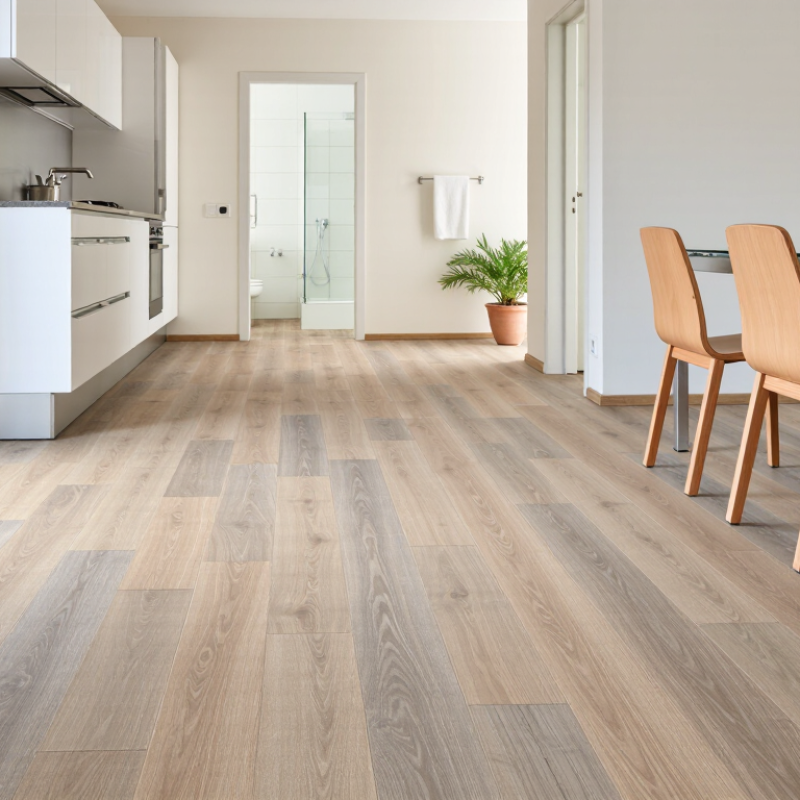
Before comparing colors, define how the room behaves every day. A busy kitchen needs resistance to spills, dropped utensils, and repeated cleaning. A bathroom demands careful moisture control around the toilet, tub, and vanity. A quiet bedroom may prioritize softness, warmth, and reduced footstep noise. Measure the room accurately, including door swings and floor transitions. Small errors can create visible gaps.
Moisture changes the decision. EPA’s Indoor Air Quality guidance reports that indoor pollutant concentrations are often two to five times higher than outdoor levels. Select low-emitting flooring and use ventilation during installation. Check technical sheets for VOC testing, cleaning limits, wear layers, and required adhesives. Relevant standards, such as ASTM F1303, also help verify resilient sheet flooring performance. Do not judge durability by thickness alone. Installation quality matters just as much.
Walk through the room at different times. Notice sunlight, tracked dirt, chair movement, and standing water near entrances. A textured surface may hide dust but require more cleaning. A pale, smooth surface can brighten a narrow room, yet reveal every mark. I would not pretend one sheet flooring suits every home. Even careful planning can miss a leaking appliance or uneven subfloor. Recheck those risks before ordering.
Sheet flooring choices begin with material, not color. Vinyl offers strong water resistance and simple cleaning, while linoleum uses natural raw materials and can develop a warmer visual character. Rubber provides resilient footing in demanding rooms. According to Grand View Research’s 2024 flooring market report, resilient flooring remains a major growth segment, partly because buyers value durability and easier installation.
Surface details matter under real conditions. Check the wear layer thickness, but do not treat thickness as a complete quality score. A dense polyurethane finish can resist scuffs, while embossed textures hide small marks and improve visual depth. However, deep embossing may hold grit near cooking areas. Smooth surfaces clean faster. They can feel slippery when wet. Look for documented slip-resistance testing, such as results based on ASTM methods, rather than vague terms like “safe surface.”
Indoor air quality deserves attention. The U.S. Environmental Protection Agency reports that indoor pollutant levels can be two to five times higher than outdoor levels, with some cases far higher. Choose low-emission adhesives and request current emissions documentation. Seams also deserve a close inspection. Poorly joined sheets can lift at a doorway, especially over uneven subfloors. I have seen attractive installations fail because preparation was rushed. That mistake is easy to repeat. Measure moisture, flatten the floor, and inspect samples under daylight before choosing.
| Material | Typical Surface Features | Moisture Performance | Durability and Care | Often Suited To | Points to Check |
|---|---|---|---|---|---|
| Sheet vinyl | Printed patterns can imitate wood, stone, or tile; surface may be smooth, embossed, or textured. Cushioned and fiberglass-reinforced constructions are available. | The vinyl surface resists water well. Seams, edges, and the subfloor can still be vulnerable if water gets underneath. | Generally easy to clean with routine sweeping and damp mopping. Sharp objects, heavy loads, or dragging furniture may cause cuts, dents, or tears. | Kitchens, bathrooms, laundry rooms, and other areas where easy cleaning and water resistance are priorities. | Check wear-layer and installation requirements, seam placement, subfloor flatness, and whether the product is approved for the intended room. |
| Linoleum sheet | Made primarily from linseed oil, wood or cork flour, mineral fillers, and a backing. Color and pattern may run through the material; finishes and surface textures vary. | Handles normal spills when properly installed and maintained, but standing water or moisture entering seams can damage the material or backing. | Can be long-lasting with suitable care. Follow the flooring instructions for cleaning and any required protective finish; avoid harsh cleaners not approved for the surface. | Living areas, kitchens, and other spaces where a resilient floor with natural raw materials is desired. | Confirm the product is intended for the room, and use an installer familiar with seam treatment and the required subfloor conditions. |
| Rubber sheet | Available in smooth or patterned finishes, including textured surfaces. The resilient feel can provide underfoot comfort; slip resistance depends on the specific surface and conditions. | Rubber itself is water-resistant, but seams and perimeter details need appropriate installation to prevent moisture from reaching the subfloor. | Often selected for demanding use and easy routine cleaning. Some oils, solvents, and certain cleaning products can affect rubber; check chemical compatibility. | Gyms, workshops, utility areas, and other spaces where resilience or a textured surface is useful. | Verify suitability for the intended traffic, cleaning agents, and moisture conditions; follow guidance for seams, adhesives, and acclimation. |
| Cushioned sheet vinyl | A sheet-vinyl construction with a resilient backing or foam layer, often with printed and embossed decorative surfaces. | The wear surface resists everyday spills, but the cushioning does not make seams or exposed edges waterproof. | Softer underfoot than many firm-surface floors, but the cushioned layer may be more susceptible to dents from heavy furniture or concentrated loads. | Homes where comfort underfoot and a broad choice of decorative patterns are important. | Check furniture-protection guidance, indentation limits, and whether the subfloor needs a smooth underlayment. |
Selection note: Performance varies by product construction and installation. Check the product’s technical instructions, room suitability, subfloor requirements, seam details, and maintenance guidance before choosing.
Choosing sheet flooring starts with the room beneath it. Measure each wall at several points, because older rooms are rarely square. Record doorways, alcoves, vents, and fixed cabinets. Add extra material for pattern matching and trimming. Five to ten percent is often reasonable, but complex layouts may require more. A small measuring error can create a visible gap.
The subfloor needs careful inspection before installation. Concrete should be dry, clean, and free from cracks or raised areas. Wood subfloors may need secure panels and a smooth underlayment. Use a moisture test when conditions are uncertain. Do not hide uneven spots; sheet flooring can reveal them quickly. It often does.
Installation choices depend on room size, traffic, and flooring instructions. Loose-lay installation can simplify future removal, but movement may occur in large rooms. Full-spread adhesive offers stronger stability and usually demands more preparation. Heat-welded seams can improve moisture resistance, though they require trained handling. Follow the product instructions and local installation standards. I once focused on cutting accuracy and overlooked a slightly damp subfloor. The flooring looked fine at first, then the adhesive bond weakened. That mistake changed my process. Now I check moisture, flatness, and measurements twice before cutting. Rechecking feels slow. Repairing a poor installation takes longer.
Choosing sheet flooring requires more than matching a room’s color. Durability should fit the traffic pattern.
In busy hallways, inspect the wear layer, seam quality, and warranty limitations. ASTM flooring standards can guide testing, but laboratory results may not reflect sand, wet shoes, or moving furniture. I have learned that “commercial grade” alone explains too little.
Maintenance affects safety and indoor air quality. Smooth, sealed surfaces are easier to clean because they leave fewer places for moisture and soil. However, excessive detergent can create a slippery film.
The National Floor Safety Institute links many slip incidents with contaminated walking surfaces, so cleaning instructions deserve serious attention. Choose flooring with a documented slip-resistance test, and check performance when wet. That detail is easy to overlook.
Tips: Ask for independent emissions testing and installation guidance.
The U.S. Environmental Protection Agency reports indoor pollutant levels can be two to five times higher than outdoors, and sometimes much higher. Select low-emitting materials, use low-odor adhesives, and ventilate during installation.
The World Health Organization’s 2021 air-quality guidelines set annual PM2.5 guidance at 5 µg/m³, although flooring cannot control every indoor pollutant. Avoid assuming “low VOC” means risk-free.
Review the full emissions report, cleanability data, and moisture instructions before buying. A lighter pattern may show dirt sooner, but that can encourage better cleaning habits.
Choosing sheet flooring means balancing today’s price with tomorrow’s performance.
Grand View Research valued the global resilient flooring market at about $40.8 billion in 2023. Its report projects continued growth through 2030, driven partly by moisture resistance and easier maintenance. That matters in kitchens, bathrooms, and entryways, where spills and grit quickly expose weak materials.
Compare the full installed cost, not only the roll price. Include subfloor repairs, adhesive, removal, delivery, and professional fitting. A smooth subfloor can prevent visible bumps and premature wear.
Measure twice. Details matter. Thicker wear layers usually cost more, but they may tolerate busy hallways better. Still, thicker does not automatically mean better for every room.
Design affects long-term value, too.
Quiet stone patterns can outlast fashionable colors, while pale surfaces show tracked dirt faster. The National Association of Realtors’ 2022 Remodeling Impact Report recorded 118% cost recovery for new wood flooring, though sheet flooring is not wood. Treat that figure as a renovation benchmark, not a promise.
I would also question overly optimistic durability claims. Cleaning habits, sunlight, furniture legs, and installation quality can change the result.
Request written warranty terms, maintenance instructions, and samples viewed beside natural and artificial light. A cheaper floor may win at checkout, then lose through repairs and replacement.
Measure each wall at several points. Note doorways, alcoves, vents, and fixed cabinets. Add 5–10% for trimming and pattern matching. Odd corners need extra care.
Check that concrete is dry, clean, and free of cracks or raised areas. Secure wood panels and smooth the surface. Test moisture when conditions are uncertain.
Loose-lay installation can make future removal easier, but flooring may shift in large rooms. Full-spread adhesive adds stability and needs careful preparation. Follow the flooring instructions.
Sheet flooring can show uneven spots quickly. A small ridge may become visible through the finished surface. It is easy to miss one.
Five to ten percent is often reasonable for simple rooms. Complex layouts or matching patterns may need more. Recheck measurements before cutting.
Inspect the wear layer, seams, and warranty limits. Laboratory ratings may not reflect sand, wet shoes, or furniture dragged across the floor.
Follow the cleaning instructions and remove soil or moisture. Too much detergent can leave a slippery film. Check slip-resistance performance when wet.
Ask for independent emissions testing and installation guidance. Consider low-emitting materials, low-odor adhesives, and ventilation during installation. “Low VOC” does not mean risk-free.
Choosing the best Sheet Flooring begins with understanding your room’s specific needs, including moisture exposure, foot traffic, comfort, appearance, and cleaning requirements. Compare available materials by examining their surface texture, water resistance, softness, stain protection, and overall suitability for spaces such as kitchens, bathrooms, bedrooms, or busy hallways. It is also important to review installation methods, subfloor preparation, seam placement, and accurate room measurements to reduce waste and prevent future problems.
Before making a final decision, consider the flooring’s durability, maintenance demands, slip resistance, and potential impact on indoor air quality. A practical choice should also fit your budget and complement your preferred colors, patterns, and interior style. Although a lower initial price may be appealing, evaluating expected lifespan, repair needs, cleaning effort, and long-term performance can help you achieve better value. By balancing function, safety, design, installation requirements, and total cost, you can select flooring that remains attractive and reliable for years.
