
Why Choose PVC Wood Plank Flooring for Your Project?
Choosing a floor affects more than appearance. It changes how a room sounds, feels, and performs every day. Pvc Wood Plank Flooring offers a practical wood-look surface for homes, offices, retail spaces, and hospitality interiors. Its layered construction can resist moisture, stains, and ordinary surface wear. That matters near entry doors, kitchen sinks, and busy corridors.
Thomas Baert, a flooring industry specialist and founder of Floorify, says, “A floor should be beautiful, practical, and made to last.” This idea explains the growing interest in Pvc Wood Plank Flooring. Realistic grain patterns create warmth without demanding the same maintenance as natural timber. Many products also provide softer underfoot comfort, easier cleaning, and faster installation. The room feels finished sooner.
Still, the material is not perfect. Product quality varies. Poor subfloor preparation may cause movement, visible joints, or premature damage. Temperature changes can also affect installation results. A careful project should examine wear layers, plank dimensions, slip resistance, warranty terms, and indoor-air certifications. Samples deserve attention under daylight and warm lighting. Small details matter.
Think about muddy shoes. Think about spilled coffee. Think about rolling office chairs.
Pvc Wood Plank Flooring can be a strong choice when durability, design flexibility, and moisture resistance must work together. However, the best result depends on selecting a suitable product and following the manufacturer’s installation guidance. Beauty helps. Performance decides.
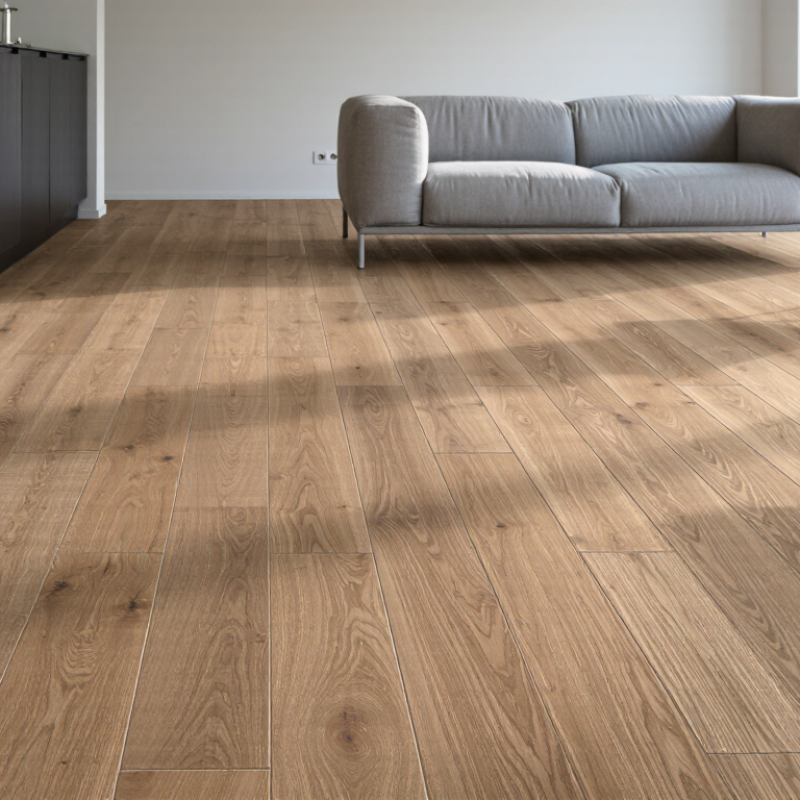
PVC wood plank flooring is a resilient floor covering made primarily from polyvinyl chloride. It is not timber. Instead, manufacturers press several layers into a stable plank. These usually include a backing layer, a printed wood image, and a transparent wear layer. The surface may show oak-like pores, knots, and subtle embossing. However, appearance alone does not prove quality.
Grand View Research reported that the global luxury vinyl flooring market reached about USD 18.7 billion in 2023. Its analysis also projects continued growth through 2030. Fortune Business Insights estimated the broader vinyl flooring market at approximately USD 25.8 billion in 2023. These figures reflect rising demand for durable, moisture-resistant flooring. They do not mean every PVC plank performs equally. Thickness, wear-layer depth, dimensional stability, and installation quality still matter.
In field installations, PVC planks feel warmer and quieter than ceramic tile. Their low water absorption suits kitchens, corridors, and busy retail areas. A thicker wear layer can better resist scratches from grit and chair movement. The subfloor must remain clean, dry, and level. Small uneven areas can later appear as visible shadows. That detail is easy to underestimate. PVC also has limitations. Heavy furniture may leave pressure marks, and poor disposal can create environmental concerns. Product declarations, test results, and maintenance instructions deserve careful review before specifying the material.
PVC wood plank flooring is a resilient flooring material made primarily from polyvinyl chloride, with a printed wood-look surface and a protective wear layer. The chart compares the typical moisture sensitivity of common flooring materials on a relative scale from 1 to 10, where a lower score indicates better resistance to moisture-related damage.
PVC wood plank flooring is suitable for areas where easy cleaning, consistent appearance, and resistance to everyday moisture are important. Actual performance depends on the product construction, installation method, subfloor condition, and maintenance practices.
PVC wood plank flooring begins with carefully measured polyvinyl chloride resin. Manufacturers blend it with stabilizers, pigments, processing aids, and, in some products, plasticizers. The mixture must stay consistent. Small ratio changes can affect flexibility, color, and dimensional stability. In practical factory work, moisture and temperature records matter as much as the recipe.
After mixing, heat softens the compound for extrusion or calendering. Extrusion pushes material through a shaped die, while calendering forms it between heated rollers. The surface then receives a printed wood pattern and a transparent wear layer. Embossing presses subtle grain lines into the warm surface. That texture catches light differently across each plank. Cooling stabilizes the profile before planks are cut, milled, and inspected. Technicians check thickness, color matching, edge accuracy, and resistance to wear.
A stable core helps installation, but subfloor preparation still matters. Uneven concrete can telegraph through thin flooring. On real job sites, attractive samples sometimes fail when installers ignore acclimation or expansion gaps. That is a useful warning. Quality testing should include dimensional change, scratch resistance, and slip performance under appropriate standards. No manufacturing line is flawless. Batch records and honest inspection make defects easier to trace and correct. For any project, compare construction details rather than relying only on a convincing wood image.
PVC wood plank flooring suits projects needing a wood appearance without demanding upkeep. Its layered construction resists everyday moisture, making it useful in kitchens, rental units, and corridors. A damp cloth handles most spills. That matters.
The planks are lightweight and often cut with common tools, which can shorten installation time. Click-fit systems create clean lines, while adhesive options suit stable, carefully prepared subfloors. Good preparation remains essential.
Dust, uneven concrete, or trapped moisture can show through the surface. Realistic grain and embossed texture can make the floor feel warmer than plain sheet material. It is also quieter and softer than ceramic tile underfoot.
Durability offers another practical advantage. The wear layer helps resist scuffs from shoes, chairs, and rolling storage. Still, no PVC floor is indestructible. Strong sunlight may affect color over time, and sharp furniture feet need protection. Check room conditions, subfloor moisture, and cleaning requirements before ordering. Measure twice to reduce waste. In busy commercial areas, replaceable planks can simplify future repairs, although later batches may not match perfectly. That limitation deserves attention.
Choosing the right PVC wood plank flooring starts with the room, not the color. Start with the room. Bathrooms, kitchens, and entryways need planks with reliable water resistance and sealed edges. Busy hallways benefit from a durable wear layer, while bedrooms may need less protection. Check the technical sheet for thickness, wear-layer rating, slip performance, and installation limits. Ask whether the product suits your subfloor. Measure twice.
Before ordering, place full-size samples near windows and under evening lighting. A gray oak tone may look cool in a bright showroom but warmer at home. Texture matters too; embossed grain can hide small scratches better than a flat printed surface. I have seen attractive planks fail when uneven floors were ignored. The mistake was not the flooring. It was poor preparation.
Allow acclimation when required, and follow the stated expansion gaps around walls and cabinets. For larger projects, request test pieces and confirm cleaning requirements with the installer. PVC is practical, but no option fits every room. A careful choice balances appearance, moisture exposure, foot traffic, maintenance, and repair needs. That balance usually matters more than a fashionable shade.
| Selection Criteria | PVC Wood Plank Flooring | Ceramic or Porcelain Tile | Laminate Flooring | Solid Wood Flooring |
|---|---|---|---|---|
| Typical Construction | Multi-layer resilient flooring with a PVC wear layer, decorative wood-look film, and a stable backing layer. | Clay-based tile fired at high temperature; porcelain has lower water absorption than standard ceramic tile. | Fiberboard core with a printed decorative layer and a protective wear surface. | Natural wood boards manufactured from a single species of timber. |
| Water Resistance | High when seams are correctly installed and sealed. Suitable for kitchens, utility rooms, and many moisture-prone areas. | Very high, especially for porcelain tile; grout joints still require proper maintenance. | Usually limited to products specifically rated for moisture exposure; standing water can damage many systems. | Low to moderate; prolonged moisture can cause swelling, cupping, or staining. |
| Installation Methods | May be installed as click-lock floating planks, glue-down planks, or loose-lay products, depending on specification. | Normally requires adhesive, grout, cutting, and careful substrate preparation. | Commonly installed as a floating floor with interlocking joints and an underlayment. | Installed by nailing, stapling, gluing, or floating methods depending on the board design. |
| Subfloor Requirements | Requires a clean, dry, structurally sound, and sufficiently level subfloor. Unevenness may show through resilient planks. | Requires a rigid, stable, and properly prepared substrate to reduce cracking and debonding risks. | Requires a clean, dry, and reasonably level subfloor; underlayment may be necessary. | Requires moisture control and a stable, level substrate; acclimation is commonly recommended before installation. |
| Comfort Underfoot | Softer and warmer underfoot than tile, with some resilience that can reduce walking fatigue. | Hard and durable; may feel cold without radiant heating or area rugs. | Moderately firm and warmer than tile, but generally less resilient than PVC flooring. | Warm and comfortable, although the surface can be affected by humidity changes. |
| Sound Performance | Can provide quieter footfall than hard tile; acoustic performance depends on thickness, backing, and underlayment. | Hard surfaces can create noticeable impact and footfall noise. | May produce a hollow sound without a suitable underlayment. | Can generate impact noise, particularly in multi-level buildings, unless acoustic measures are added. |
| Durability Considerations | Resists everyday scuffs and wear when the wear layer is selected for the expected traffic level. Heavy furniture may leave indentations. | Highly resistant to scratching and wear, but individual tiles can crack under severe impact or substrate movement. | Resists surface abrasion, but edges and decorative layers may be damaged by moisture or impact. | Can last for decades with suitable care, but is more susceptible to dents, scratches, and moisture-related movement. |
| Maintenance | Low maintenance. Routine sweeping or vacuuming and damp mopping with a compatible cleaner are typically sufficient. | Simple to clean, but grout lines may require periodic scrubbing or resealing depending on the grout type. | Usually cleaned with dry methods and a carefully controlled amount of moisture. | Requires wood-compatible cleaning products and control of excess water; refinishing may be needed over time. |
| Design Flexibility | Available in many plank widths, colors, textures, and wood-look patterns; some products include embossed surfaces. | Offers extensive colors and patterns, including wood-look designs, but the surface remains tile-like. | Provides numerous printed wood visuals and plank formats, with limited ability to refinish the surface. | Offers authentic natural grain and can often be sanded and refinished, subject to board thickness and condition. |
| Repairs and Replacement | Individual planks may be replaceable if the installation method and product design allow access. | Damaged tiles can be replaced, but removal may disturb surrounding grout and adhesive. | Individual planks can sometimes be replaced, although access may require dismantling nearby sections. | Boards can often be repaired or replaced, and many solid wood floors can be sanded and refinished. |
| Best-Fit Applications | Residential interiors, retail areas, offices, hospitality spaces, and renovation projects where moisture resistance and easy maintenance matter. | Bathrooms, entrances, kitchens, commercial areas, and spaces requiring a rigid, highly wear-resistant surface. | Dry residential rooms and selected light-commercial areas where a wood appearance is desired at a moderate installation complexity. | Living rooms, bedrooms, offices, and high-value interiors where natural material and refinishing potential are priorities. |
| Key Limitations | Can be affected by sharp objects, heavy point loads, extreme heat, and poor subfloor preparation; product specifications must be checked. | Hard underfoot, relatively labor-intensive to install, and vulnerable to cracking if the substrate moves. | Moisture exposure and edge swelling are important risks for products without enhanced water resistance. | Higher sensitivity to humidity, moisture, scratches, and temperature-related expansion or contraction. |
Note: Performance varies by product construction, wear-layer thickness, installation method, subfloor condition, traffic level, and maintenance. Always review the manufacturer’s technical data, installation instructions, moisture limits, and suitability ratings before specification.
PVC wood plank flooring can deliver a warm timber appearance with simpler daily care. Installation quality, however, strongly affects its lifespan. Preparation matters.
Before laying the planks, check that the subfloor is clean, dry, and level. Small bumps can create movement, visible seams, or uncomfortable soft spots. Follow the flooring instructions for acclimation, because temperature changes may affect plank size. Leave the recommended expansion space around walls, door frames, and fixed cabinets. Stagger end joints for a more natural pattern. Avoid forcing click joints together. Excessive pressure can damage the locking edges. If adhesive is required, spread it evenly and respect its open time. I once underestimated a slightly uneven floor, and the finished surface revealed the mistake under afternoon light.
Tips:
Maintenance is straightforward but still needs consistency. Sweep or vacuum regularly to remove grit that can scratch the wear layer. Wipe spills promptly with a lightly damp microfiber mop. Use a cleaner suitable for PVC flooring, and avoid harsh solvents, wax, steam, and abrasive pads. Felt pads under furniture can reduce scuffs. Lift heavy items instead of dragging them. Inspect seams near entrances and wet areas occasionally. The floor may tolerate moisture, but standing water is still a poor habit. Replacing one damaged plank can be easier than ignoring a small problem until it spreads.
Start with moisture, foot traffic, and maintenance needs, not the fashionable color. Bathrooms and kitchens need reliable water resistance and sealed edges. Hallways need a durable wear layer. Bedrooms may need less protection.
Review thickness, wear-layer rating, slip performance, and installation limits. Confirm the flooring suits your subfloor. Measure twice.
Showroom lighting can make a gray wood tone look cooler than expected. Place full-size samples near windows and under evening lights. Lighting changes everything.
The subfloor should be clean, dry, and level. Small bumps can create movement, visible seams, or soft spots. I once ignored a slight uneven area. Afternoon light exposed the mistake.
Follow the required acclimation period before laying the planks. Leave expansion gaps around walls, cabinets, and door frames. Stagger the end joints for a more natural pattern. Do not force click joints together.
Sweep or vacuum regularly to remove grit from the wear layer. Wipe spills with a lightly damp microfiber mop. Use a suitable floor cleaner. Avoid wax, steam, harsh solvents, and abrasive pads.
It may tolerate normal moisture, but standing water remains a poor habit. Dry spills promptly, especially near entrances and wet areas. Inspect nearby seams occasionally. Water resistance has limits.
Place felt pads under furniture legs to reduce scuffs. Lift heavy items instead of dragging them across the surface. Use care with chairs and metal feet. Dragging is rarely harmless.
Replacing one plank may be easier than ignoring a small problem. Keep spare planks in a known, dry location. Record the installation date and spare-plank location. I would improve that recordkeeping next time.
Pvc Wood Plank Flooring is a practical flooring solution that combines the warm, natural appearance of wood with the durability and easy care of PVC. Made by forming layered PVC materials, adding a realistic wood-grain design, and protecting the surface with a wear-resistant coating, it can provide consistent performance in residential and commercial spaces. Its main advantages include moisture resistance, simple cleaning, dimensional stability, and a wide range of colors, textures, and plank styles.
When choosing Pvc Wood Plank Flooring, consider the room’s traffic level, moisture exposure, plank thickness, surface protection, color, and installation method. Proper preparation of the subfloor is essential for a smooth and stable result. Depending on the product design, installation may involve adhesive, click-lock connections, or another suitable system. Regular sweeping, prompt removal of spills, and gentle cleaning products can help preserve the floor’s appearance and extend its service life.
